
Silentblock: Small – a component that has a significant impact on both comfort and service life
Silentblock is a structural component designed to dampen vibrations, noise and impacts between two rigid parts. Thanks to the combination of metal and a flexible material (most commonly rubber or polyurethaneu), it can significantly extend the service life of equipment and improve comfort.
In this article, we will discover the wide range of applications for silentblock across various sectors – from the automotive industry through manufacturing to logistics and construction.
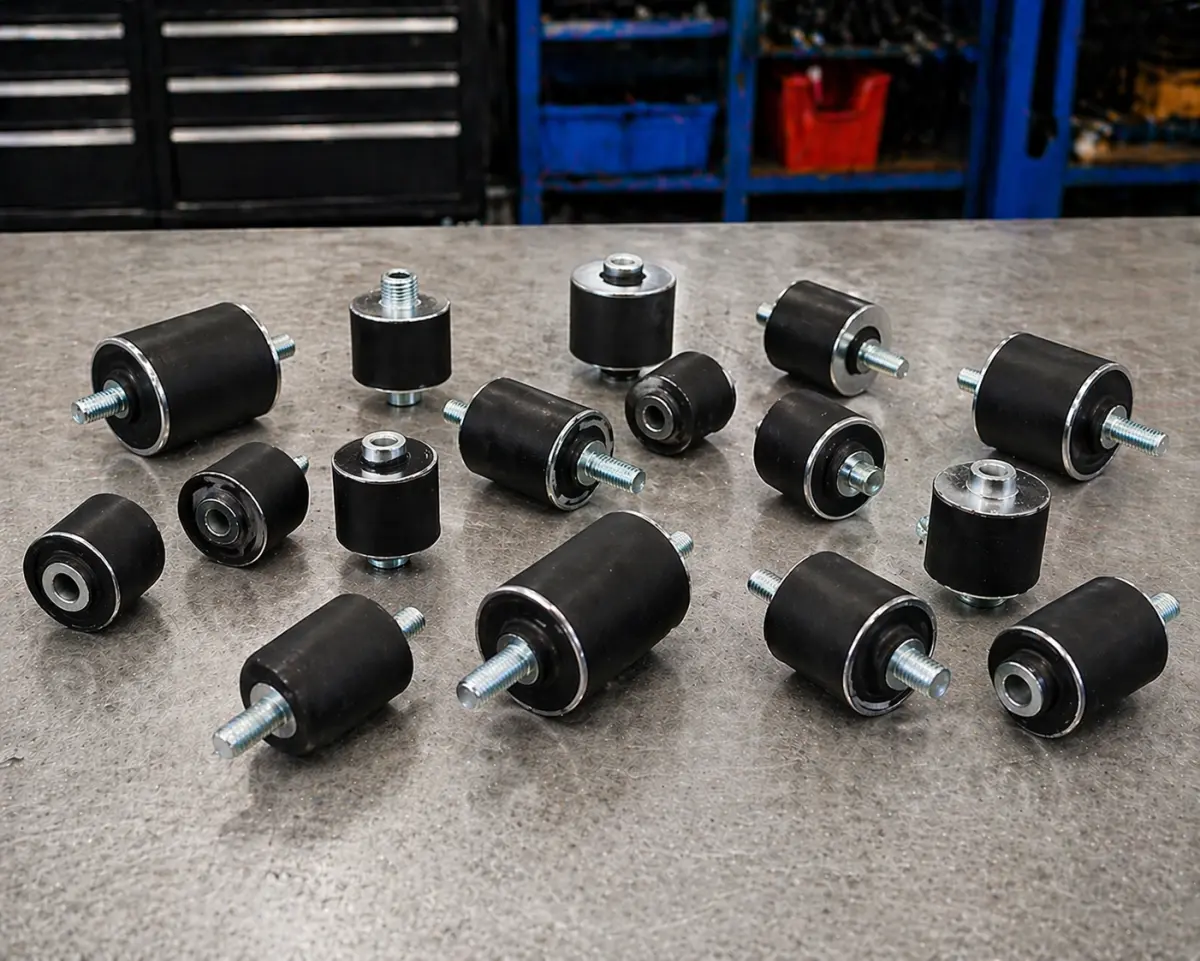
What are silent blocks and how do they work
Rubber bushings operate on the principle of effectively damping vibrations and shocks between two rigid structural components. They most commonly consist of metal parts with a flexible layer between them – usually rubber or polyurethane.
During operation, vibrations are transmitted (for example, from an engine, a machine or the movement of the structure). These vibrations reach the silentblocku, where the flexible material begins to deform. Thanks to this deformation, the energy of the vibrations is absorbed and significantly reduced, so that it is not transmitted further into the surrounding structure.
As a result, silentblock:
- reduces noise and vibrations
- protects individual components from wear and tear
- ensures smoother and more stable operation of the equipment
Put simply, a silent block acts as a flexible damping element that separates rigid parts and prevents the direct transmission of vibrations.
A correctly selected silentblock thus significantly improves the comfort, safety and service life of the entire system.
Interesting facts from history silentblocku
1. Origins in aviation
The first principles similar to silentblocku appeared in aviation, where it was necessary to dampen engine vibrations to prevent damage to the airframe.
2. A revolution in ride comfort
The introduction of silentblocku marked a huge leap forward:
- cars became quieter
- driving was more comfortable
- fewer breakdowns
Today, it is impossible to imagine a modern car without silentblocku.
3. Development of materials
The original silentblock was made from natural rubber. Gradually, the following began to be used:
- synthetic rubbers (higher resistance)
- polyurethane (for sporting use)
- special compounds for extreme conditions
4. Silentblock isn’t just found in cars
Silentblock is now also used outside the automotive industry:
- industrial machinery
- construction machinery
- air conditioning units
- rail transport
5. Small component, heavy-duty
A single silentblock must cope with:
- thousands of vibrations per minute
- extreme temperatures
- mechanical stress
Yet it costs relatively little, but its failure can cause major problems.
Main types of silent blocks
The main types of silentblock differ primarily in terms of material, design and application. Each silentblock is designed for specific loads and conditions, so it is important to select the correct type for the application.
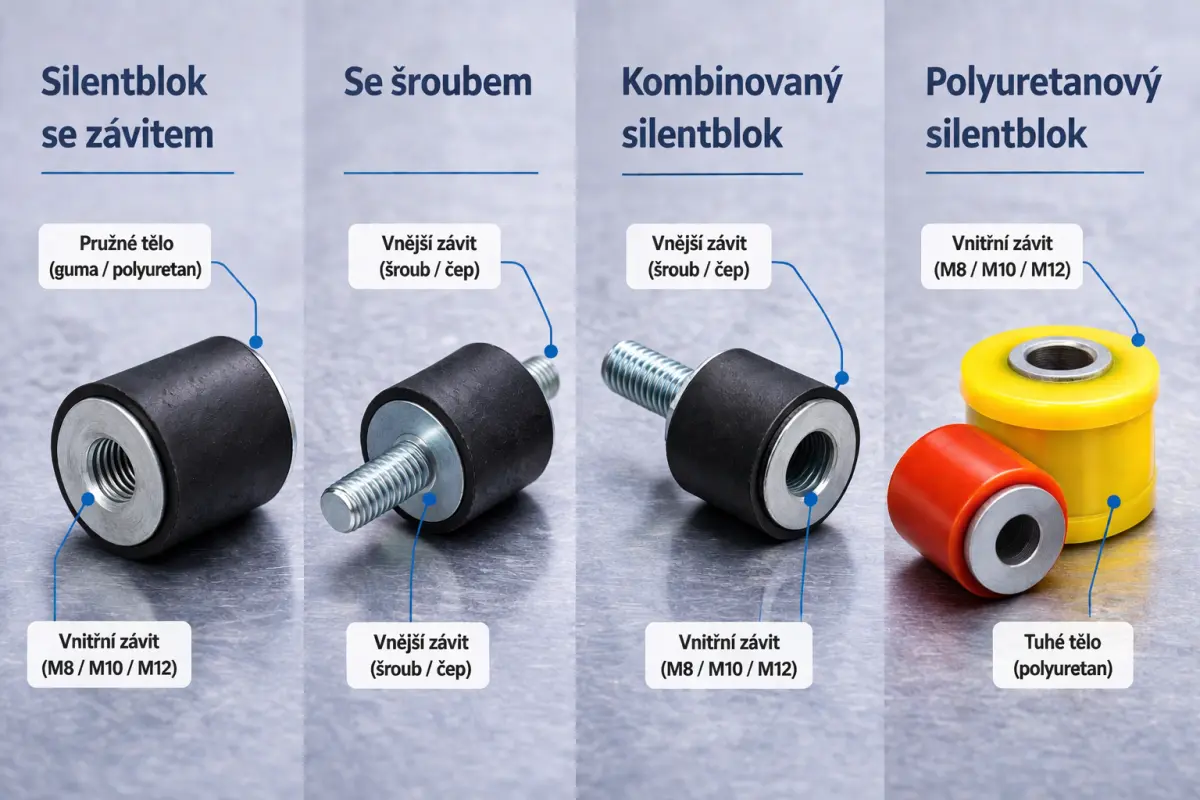
Silentblocks differ mainly in terms of their mounting method:
- internal thread (M6, M8, M10…)
- external thread (pin / screw)
- a combination of both
- without thread (pressed)
📌 Those with a thread are the most common, as they are easy to fit into machinery and structures.
1. Rubber silentblocks
The most common type of silentblocku, used primarily in the automotive industry.
Properties:
- excellent vibration damping
- quiet operation
- lower price
Applications:
- passenger cars
- general machinery
- comfort-oriented applications
2. Polyurethane silentblocks
A more modern alternative with higher resistance performance.
Features:
- higher hardness
- longer service life
- poorer damping than rubber (stiffer ride)
Uses:
- sports cars
- industrial applications
- demanding operations
3. Hydraulic silentblocks (hydrosilentblocks)
An advanced type of silentblocku containing fluid for improved damping.
Features:
- highly effective vibration damping
- Adaptability to different frequencies
- higher price
Applications:
- modern cars
- engine mounts
4. Conical and cylindrical silentblocks
Types according to design shape.
Properties:
- adapted to specific loads
- various directions of damping
Applications:
- industrial machinery
- Bespoke design solutions
5. Silentblocks with metal sleeves
Special version for higher loads.
Features:
- higher strength
- precise guidance
- resistance resistance to deformation
Applications:
- heavy machinery
- lorries
- manufacturing equipment
Choosing the right silent block isn’t difficult if you know what to look out for. The key is:
- knowing the application
- choosing the right type
- ensuring the dimensiony and mounting are correct
- adapting the material to the conditions
How can you easily identify the right silent block?
Choosing the right silent block doesn’t have to be complicated. You just need to focus on a few basic para rubber criteria, which will quickly tell you whether a silent block is suitable.
1. Correct dimension dimensions
The most important thing is that the silent block fits perfectly:
- diameter
- height
- size threadu
👉 If it doesn’t fit dimensiony, the silent block won’t work properly.
2. Mounting type
Check how the silent block is fitted:
- internal thread (e.g. M8, M10)
- external thread (screw)
- a combination of both
👉 It must be compatible with the design of the component into which you are installing it.
3. Hardness and load
Select the correct hardness according to the application:
- softer = better damping
- stiffer = higher resistance
👉 Harder silent blocks are used for machinery and industrial applications.
4. Material
Most commonly:
- rubber – comfortable and quiet
- polyurethane – more durable
👉 Choose according to the environment and the demands placed on them.
How can you extend the life of a silent block?
Althougha silent block is a durable component, it is still subject to wear and tear. The good news is that with proper maintenance and use, you can significantly extend its service life.
1. Regular checks
The key is to spot wear and tear in good time:
- cracks in the rubber
- deformation
- loose mountings
👉 It is recommended that you check these during every service or maintenance of the equipment.
2. Correct installation
Incorrect installation significantly reduces the service life of the silent block:
- do not overtighten screwy
- ensure correct positioning
- use the correct tightening torque
👉 Incorrect fitting can cause rapid damage.
3. Protection against contaminants
Dust, oils and chemicals can damage the material:
- clean the surrounding area regularly
- protect against oil and lubricants (unless the material is resistant)
4. Avoid overloading
Every silent block has its limits:
- do not exceed the maximum load
- do not use an unsuitable type for the application
👉 Overloading leads to deformation and failure.
5. Choosing the right material
For demanding conditions, choose:
- polyurethane (higher resistance)
- special compounds for chemical environments
👉 The right material = longer service life.
6. Checking surrounding components
Damaged surrounding components can ruin the silent block:
- loose parts
- misalignment of the structure
- vibrations from other sources
👉 Silent blocks often suffer as a result of other problems.
Summary
You can extend the service life of a silent block by:
✔ fit it correctly
✔ check them regularly
✔ do not overload it
✔ protect it from dirt
✔ choose the right material
👉 This will ensure that the silent block functions reliably for much longer and saves you the cost of repairs.
| +420 515 320 023 | ||
|
Mon–Thu 6:30–15:30 Fri 6:30–13:00 Lunch break 11:30–12:00 |
||
| [email protected] |
|
ADITEG, s. r. o. Vrbovec 321, 671 24 Znojmo |
