
Doormats
A practical detail that makes all the difference
They are often an underrated feature, yet they play a key role in the day-to-day running of both homes and businesses.
It’s not just about aesthetics, but above all about functionality – trapping dirt and moisture, and protecting the floor.
🔹 Why do door mats matter
Every entrance area is exposed to:
- dust
- mud
- water
- mechanical wear and tear
👉 High-quality doormats can:
✔ reduce the amount of dirt inside
✔ protect the floor
✔ improve safety (by preventing slipping)
🔹 Types of doormats
🔸 Outdoor doormats
- sturdy construction
- weather-resistant
- often made of rubber or PVC
👉 Ideal for:
- detached houses
- industrial premises
- entrances to business premises
🔸 Indoor doormats
- softer materials
- higher absorbency
- elegant appearance
👉 traps residual moisture and dust
🔸 Rubber mats
- high resistance
- non-slip properties
- easy to maintain
👉 also suitable for high-traffic areas
🔹 Design a první dojem
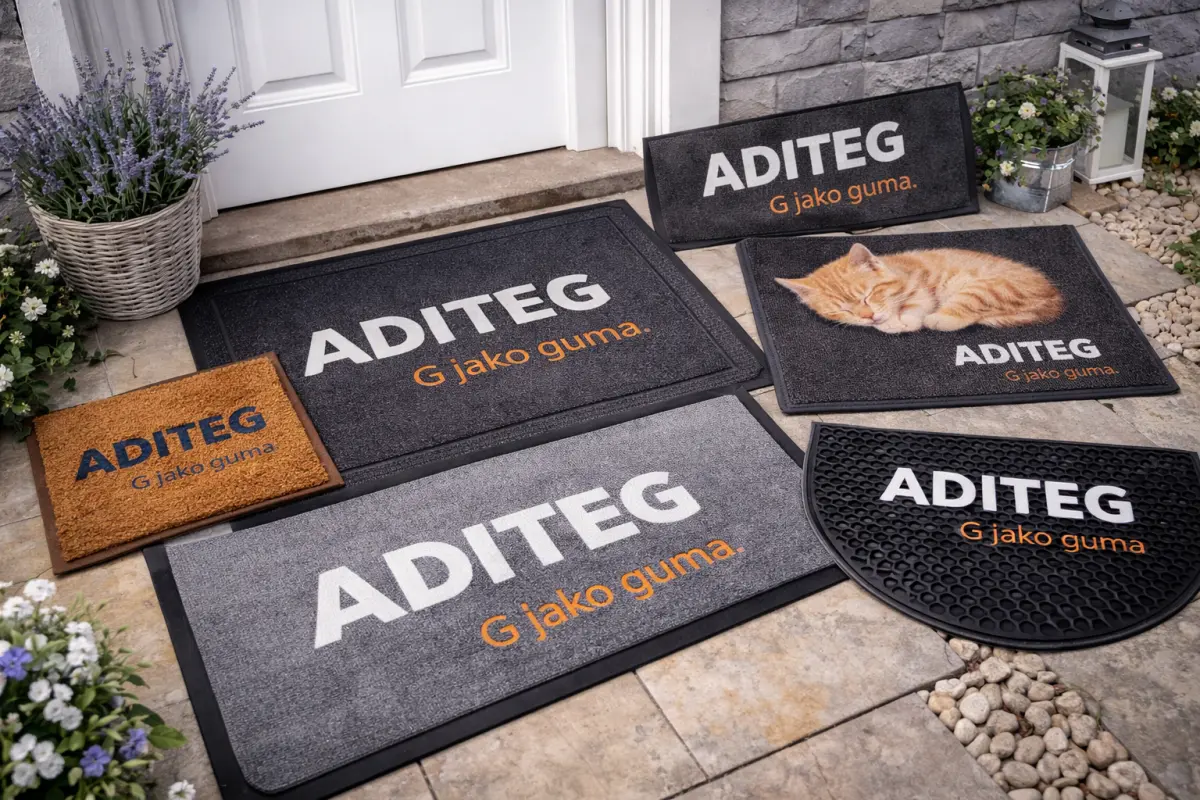
Předložky před dveře nejsou jen praktické – tvoří první dojem:
- moderní minimalistické
- s logem firmy
- s nápisem nebo grafikou
👉 vhodné i jako marketingový prvek
🔹 Předložky pro firmy a provozy
Ve firmách mají předložky ještě větší význam:
✔ udržení čistoty
✔ bezpečnost zaměstnanců
✔ reprezentativní vzhled
👉 možnost branding:
- logo firmy
- firemní barvy
- reklamní sdělení
🔹 How to choose the right preposition
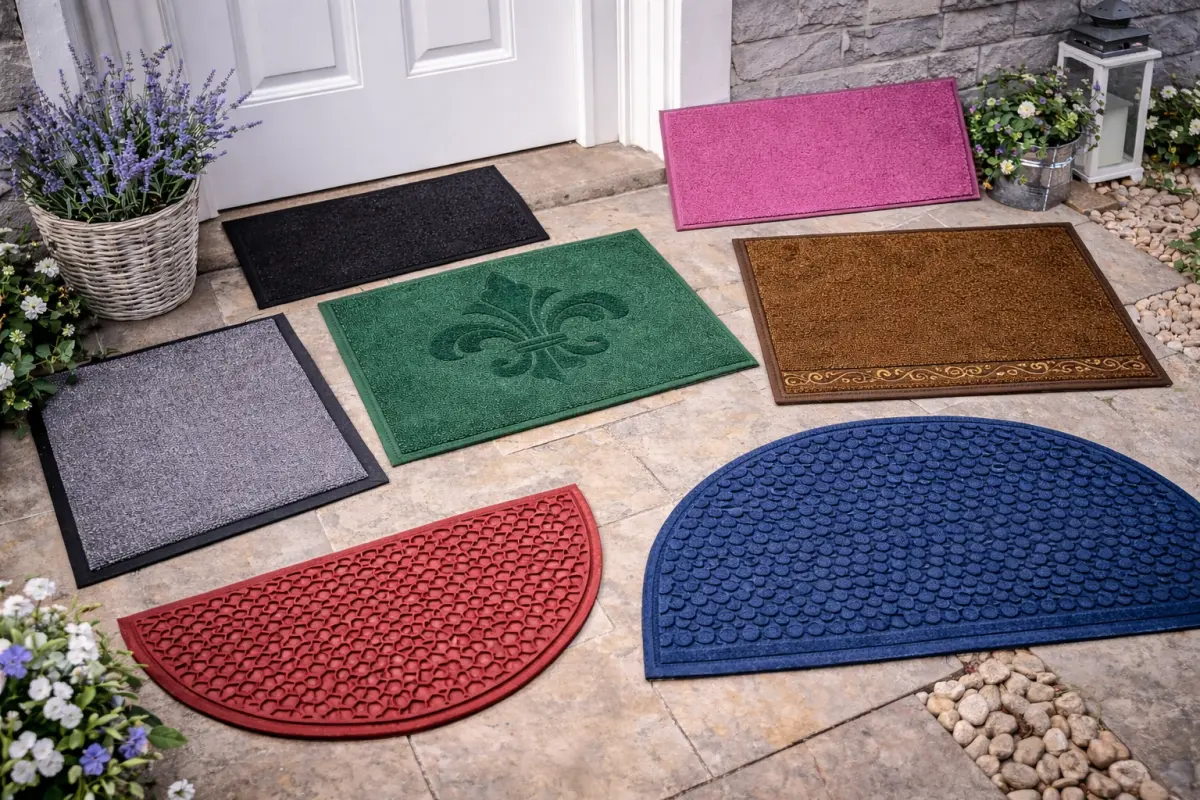
When choosing, consider:
- location (outdoors / indoors)
- load (domestic vs. commercial use)
- material
- dimension
👉 the right combination = maximum efficiency
🔹 Benefits of a bespoke solution
Door mats can be customised:
✔ to exact dimension dimensions
✔ design
✔ type of operation
➡️ ideal for businesses and specific entrances
Interesting facts about the production of doormats
🔹 A doormat is not just a “piece piece of rubber”
The production of a high-quality doormat is a combination of:
👉 chemistry, physics and design
➡️ each layer serves a specific purpose (strength, absorbency, slip resistance)
🔹 The mixture is ‘tailored to specification’
When manufacturing rubber doormats:
- various types of rubberu are mixed
- fillers (e.g. carbon black) are added
- the hardness is modified
👉 the resulting mixture is adapted to its intended use (outdoor vs. indoor)
🔹Vulcanisation is a key process
Without it, the carpet:
❌ would not be durable
❌ would quickly become misshapen
👉 During vulcanisation, rubber:
- is heated
- chemically ‘bonded’
➡️ it acquires its final properties
🔹 The non-slip properties are no accident
The underside of the mat:
👉 has a special structure or pattern
➡️ ensures:
✔ stability
✔ safety
✔ grip on the floor
🔹 The design is often moulded into the carpet
Patterns on rugs:
- lettering
- logos
- textures
👉 are created directly during production by moulding
➡️ they are not simply ‘printed on’
🔹Doormats must withstand extreme conditions
High-quality doormats can withstand:
✔ frost
✔ UV radiation
✔ water
✔ mechanical stress
👉 which is why they are tested under demanding conditions
🔹 A combination of materials enhances functionality
Modern mats are not made from just one material:
- rubber (stability)
- textile (absorbency)
- PVC (resistance)
👉 The result is greater effectiveness
🔹 Production can be more environmentally friendly
Today, the following is increasingly being used:
- recycled rubber
- more sustainable production processes
👉 without compromising on quality
🔹 Every millimetre counts
Thickness The underlay affects:
- lifespan
- comfort
- functionality
👉 A poorly chosen thickness = poorer performance
🔹The bearing is the first line of defence
Interesting fact from practice:
👉 A high-quality mat traps up to 80 per cent of dirt
➡️ significantly reduces the amount of cleaning required
| +420 515 320 023 | ||
|
Mon–Thu 6:30–15:30 Fri 6:30–13:00 Lunch break 11:30–12:00 |
||
| [email protected] |
|
ADITEG, s. r. o. Vrbovec 321, 671 24 Znojmo |
