
Conveyor belts: A comprehensive guide for industry, logistics and manufacturing
Key elements of modern automation. Without them, it is impossible to imagine efficient manufacturing, logistics or warehouse management today.
They help to speed up processes, reduce labour costs and minimise errors.
In this article, we’ll look at how conveyor belts work, the different types available, where they are used, and how to choose the ideal solution.
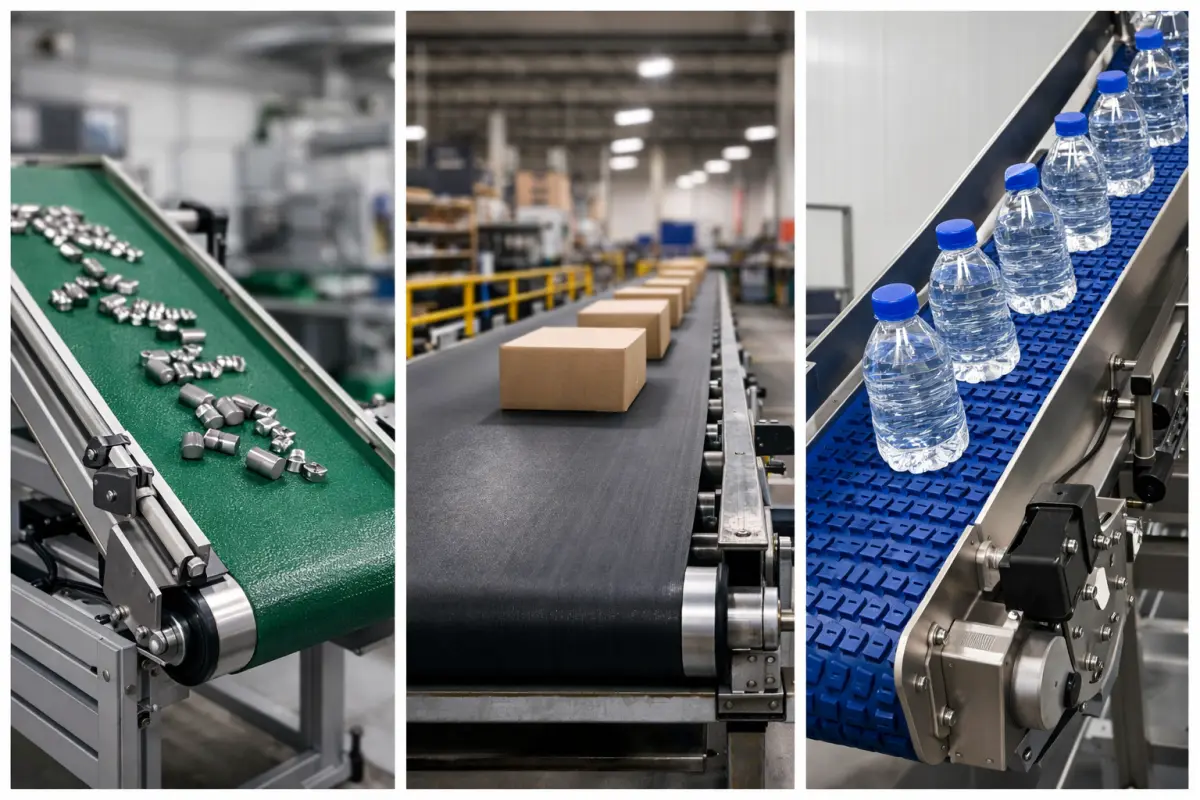
What are conveyor belts and how do they work?
Conveyor belts are mechanical devices designed to transport materials or products from one place to another. They are based on an endless strip, which is driven by a power system (a motor and rollers).
The operating principle is relatively simple:
- the motor sets the drive roller in motion
- the strip rotates around the structure
- the material moves along with the strip
Despite this simple principle, the technology can be highly sophisticated – particularly in automated operations.
Main types of strip conveyors
Choosing the right type of conveyor strip depends on the specific application. Each type has its own specific characteristics.
1. Flat conveyor belts
The most common type used in industry and logistics.
Applications:
- parcel handling lines
- manufacturing
- sorting
Advantages:
- simple design
- versatile use
- easy maintenance
2. Modular stripy
They consist of plastic modules joined together.
Applications:
- food industry
- pharmaceuticals
- damp environments
Advantages:
- high resistance
- easy replacement of parts
- hygienic design
3. Roller conveyors
Rollers are used instead of stripu.
Applications:
- warehouses
- logistics centres
Advantages:
- low resistance
- suitable for heavy items
4. Inclined conveyors
These enable the transport of materials to a height.
Applications:
- production lines
- packaging
Advantages:
- space-saving
- efficient handling
5. Special conveyor belts
For example:
- anti-static strip materials
- heat-resistant strip
- oil-resistant stripy
They are used in specific industrial conditions.

Where conveyor belts is used
Conveyor belts can be found in almost every sector:
Industry
- Automotive industry
- mechanical engineering
- electronics manufacturing
Logistics and warehousing
- parcel sorting
- dispatch
- distribution
Food industry
- Food processing
- packaging
- Hygiene facilities
Agriculture
- crop transport
- raw material handling
How to choose the right conveyor belt
When making your choice, it is important to take several factors into account:
1. Type of material
- weight
- size
- shape
2. Environment
- Temperature
- humidity
- chemical influences
3. Speed and performance
- required capacity
- frequency of operation
4. Design and space
- length and width
- incline
- available space
Advantages of strip conveyors
The use of conveyors brings a number of benefits to businesses:
✔ increased productivity
✔ reduced labour costs
✔ smooth production flow
✔ minimisation of errors
✔ safer handling
Automation can significantly improve the efficiency of the entire operation.
Maintenance and service life of conveyors strip
Proper maintenance is key to a long service life.
We recommend:
- regular checks on the tension of stripu
- cleaning the surface
- checking the bearings and motor
- timely replacement of worn parts
This helps to prevent breakdowns and downtime.
| +420 515 320 023 | ||
|
Mon–Thu 6:30–15:30 Fri 6:30–13:00 Lunch break 11:30–12:00 |
||
| [email protected] |
|
ADITEG, s. r. o. Vrbovec 321, 671 24 Znojmo |
