
All about rubber seal: A guide to materials, types and uses
Rubber seal is a key component in both hydraulic and pneumatic systems, where the correct choice of material is crucial to their functionality and reliability. From extremely durable PTFE, which can withstand temperatures ranging from -260 °C to +260 °C, to FKM (Viton), which can withstand temperatures of up to 250 °C for short periods.
In our guide, we’ll focus on the various types of seal and their specific properties. We’ll introduce you to flat rubber seal, which can be manufactured in thicknesses ranging from just 0.5 mm to robust rubber components with a thickness of 50 mm. Seal made from materials such as polyurethane, NBR, EPDM, CR, Silicone, NR, SBR, IIR, CSM, ACM or FKM offer different properties suitable for specific applications. From resistance resistance to oils, chemicals and fuels to excellent protection against ozone and weathering.
In this article, we will provide you with a basic overview of materials, types and shapes, as well as examples of the use of rubber seal, so that you can select the right solution for your specific needs. You will also learn about the options for custom-made seal tailored precisely to your requirements.
What is a rubber (rubbero) seal and why is it indispensable?
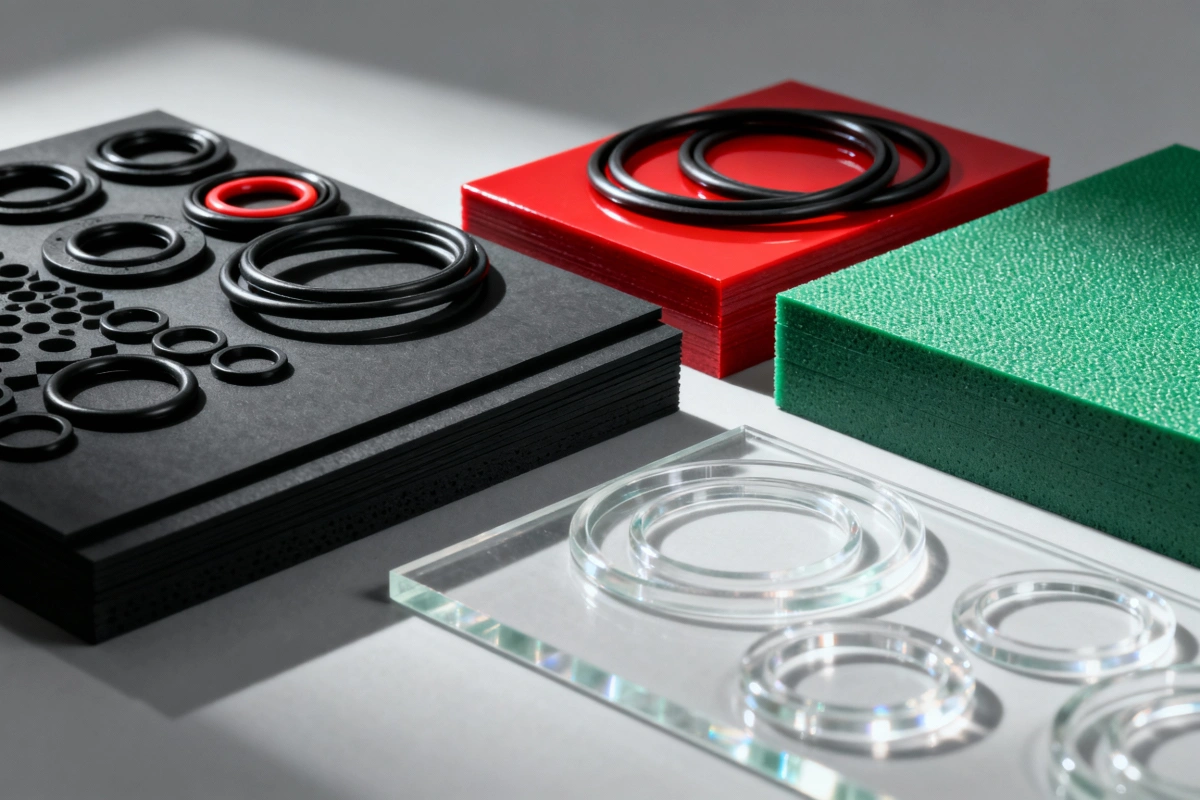
A Rubber seal is a component that prevents fluids (liquids or gases) from passing through gaps between other components. It is primarily made from flexible or at least partially deformable materials. We don’t usually notice these often inconspicuous components until they start to fail. However, when a problem arises, we immediately realise just how indispensable they are.
How seal works in practice
The principle behind seal lies in its ability to fill the gaps between two abutting surfaces. Thanks to its elasticity, rubbere, it deforms when compressed, creating a tight seal that prevents the escape of fluids. Seal operates on the basis of several key properties:
-
Elasticity of the material
the ability to adapt to the shape of the parts being joined
-
Resistance in relation to operating conditions
temperatures, pressure and exposure to chemicals
-
Shape memory
The modern seal retains its original shape over the long term
The most important function of seal is to create an airtight or watertight seal. Furthermore, it prevents the leakage of pressurised fluids and the ingress of dust and contaminants into the system, whilst helping to reduce vibration and noise. Crucially, for joints exposed to high pressure, it is essential that seal is the weakest link in the sealing system. Under extreme loads, it is safer for only seal to fail than for the entire pipe to burst or for an explosion to occur.
Where do we most commonly come across sealm?
Without even realising it, rubber seal is used in countless everyday applications. In the automotive industry, it ensures that draughts, dirt and dust do not enter the vehicle’s interior, whilst also serving an acoustic function. It dampens sounds from the outside environment. In homes , it is found primarily in windows, where it improves thermal insulation, reduces noise and increases the energy efficiency of buildings.
We also commonly encounter it in:
-
The engineering industry: for the manufacture of structural and building components
-
The food industry: in food processing facilities requiring hygienic conditions
-
Healthcare: in medical devices such as catheters
-
Water supply and plumbing: seal in drinking water distribution systems
- The aviation industry: seal in the aircraft cabin prevents a drop in pressure
Seal is indispensable in hydraulic and pneumatic systems, gas distribution networks and industrial piping systems.

The difference between rubberm and other types of seal
Rubber, or rubber, seal types differ from other seal types primarily in terms of their properties and applications. Whilst rubber seal are primarily designed for general sealing applications, specialised seal are intended for specific types of joints and conditions.
The main differences lie in the material, design and application. Rubber seal are usually small and have a smaller sealing surface than other types of seal. Unlike metal or composite seals, rubbers offer excellent elasticity, which is essential for creating a reliable seal. Thanks to this elasticity, rubber seal can function even between less precisely matched support surfaces.
Compared to flat metal seals, rubber seals are characterised by their ability to absorb vibrations and compensate for the thermal expansion of the joined materials. Another advantage is that they are easier to replace when worn out. Whilst worn rubber seals can be replaced relatively easily, repairing a damaged seal of a different type may require the dismantling of the entire system.
To ensure optimum performance, it is important to select the correct type of material according to the specific requirements for resistance, thermal stability and chemical compatibility with the media being transported.
Basic types of rubberch seal by shape
The shapes of rubberch seal play a crucial role in their correct function and application. The variety of shapes allows seal to be adapted to specific needs and operating conditions. Let’s take a look at the basic types that we may encounter in practice.
O-rings and X-rings
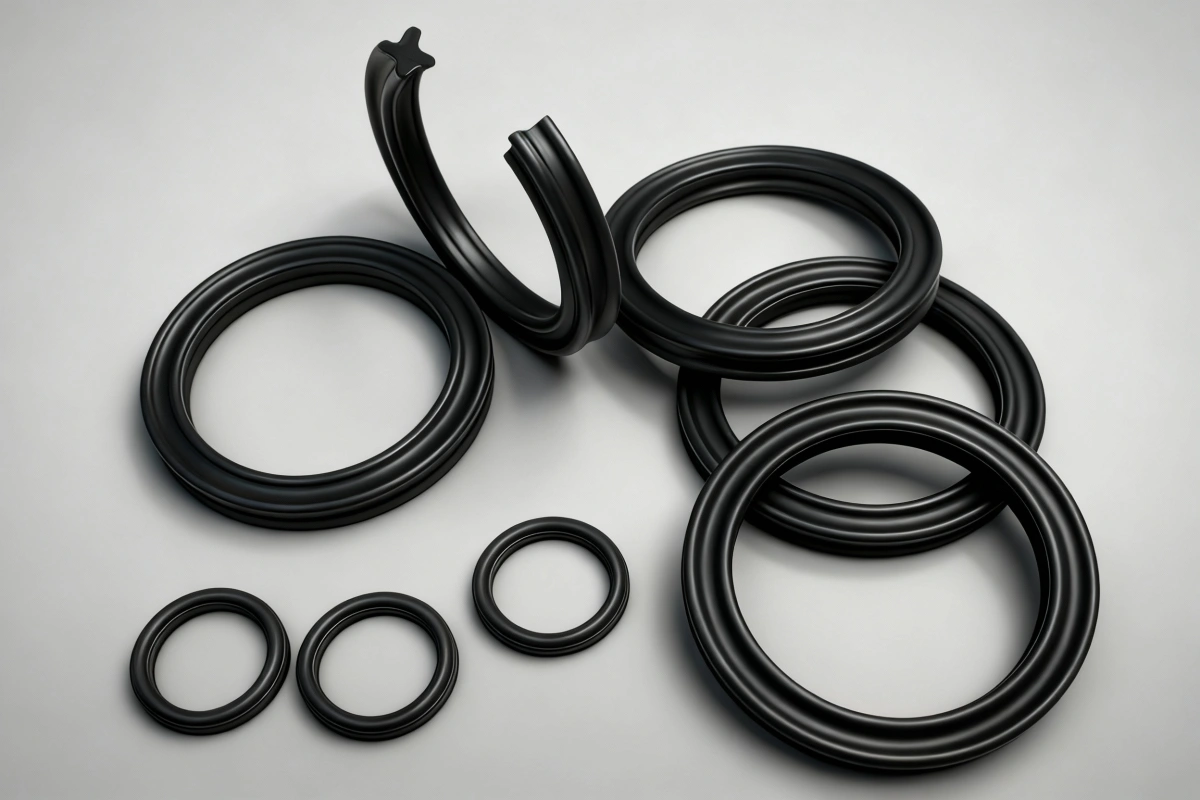
O-rings are the most common type of rubber seal with a circle cross-section. Their main function is to prevent unwanted leakage and loss of liquid or gas. The principle behind their operation lies in the change of the circle cross-section to an elliptical shape when compressed within a groove. The Diameter of the O-ring’s cross-section must always be greater than the depth of the groove to ensure the necessary compression and seal.
The main advantages of O-rings include:
-
the ability to seal across a wide range of pressures and temperatures
-
small space requirements during installation
-
easy maintenance and the possibility of reuse
-
gradual signs of failure, which indicate the need for replacement
X-rings, on the other hand, have a square cross-section with annular grooves that form four sealing blades. Compared to O-rings, they require less initial compression, which leads to reduced friction and less wear in dynamic applications. Another advantage is their greater stability within the installation space, as they do not rotate within the groove, making them more suitable for rotating seal.
Flat seal and sealing tapes
Flat seal is primarily used for seal flanges and joints between two flat surfaces. They are manufactured from rubber plates of various thicknesses (from 0.5 mm to 50 mm) and materials, with the base material always being rubber, which determines the resistance of the final product.
Digital CNC plotters are most commonly used to manufacture flat seal, whilst water jet cutting is used for thicker materials. Sealing tapes, on the other hand, are a flexible and easy-to-apply solution for less demanding applications. They are available in various widths and thicknesses, often in self-adhesivem form for easy installation.
profiles sealing tape by the metre
profiles sealing tape by the metre is one of the most versatile types of seal. They are supplied as continuous profiles, which can be cut to length as required. They are characterised by their mechanical, physical and chemical properties and their resistance to permanent deformation, making them ideal for the seal of structural and building components across various industrial sectors.
They are available on the market in many different shapes – U-profiley, V profiles, L profiles, C profiles, P profiles, I profiles, T profiles and others. In terms of material, they are divided into compact (hard) and microporous (soft) types, with microporous profiles offering better adaptability to uneven surfaces. Profiles are supplied in various materials, including EPDM, NBR, siliconeu or PVC, depending on the requirements for resistance.
Special Moulded shapes for industrial use
seal special moulded shapes are manufactured for specific industrial applications. A typical example is moulded compact rubber profiles for the effective sealing of gaps, joints and holes. These profiles are used to seal doors, windows, gates or access hatches in the engineering, construction and automotive industries.
This range also includes hydraulic seals such as flat seal, back-up rings, wear rings or rotational seal. Diaphragms and seals are also manufactured in an extruded form and can be combined with metal. For more demanding applications, seal can be custom-made to a sample or technical drawing, which is particularly suitable where standard profiles do not meet specific requirements.
The most commonly used materials for rubber seal
Choosing the right material for rubber seal determines its performance under specific conditions. Each type of rubbere has its own specific properties, which make it suitable for certain environments and applications. Let’s take a look at the most commonly used materials and their characteristic properties.
NBR – oil resistance and fuels
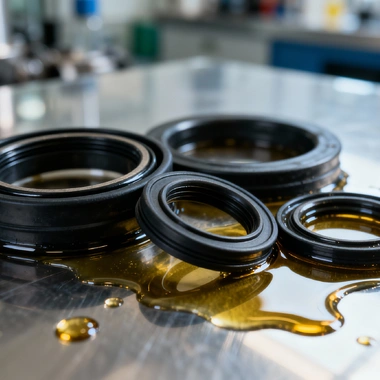
Nitrile-butadiene rubber (NBR) is particularlynotable for its good resistance resistance to oils, greases and many non-polar liquids. This synthetic material is used in applications involving contact with mineral or transformer oils. However, for reliable and long-term contact with fuels such as petrol or diesel, it is important to select a specialised grade of NBR, as standard types of this rubber may not exhibit sufficient resistance.
Key advantages of NBR rubbere:
-
operating temperature in the range -30 to 100 °C
-
high tensile strength and low swelling
-
excellent resistance resistance to wear and permanent deformation
-
good resistance to natural and thermal ageing
However, this material also has its limitations. It is not suitable for polar liquids (ketones, esters, alcohols) and has poor resistance resistance to ozone. It is most commonly used in engineering, construction and the automotive industry.
EPDM – ideal for outdoor use
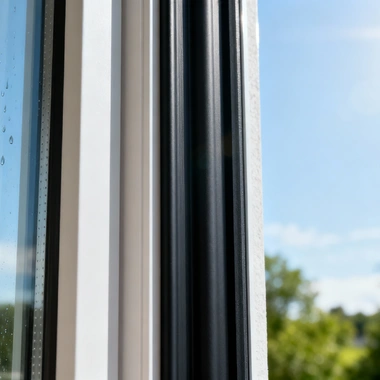
EPDM (Ethylene-Propylene-Diene Monomer) is an excellent choice for outdoor applications. Thanks to its properties, it offers excellent protection against the elements, UV radiation and ozone. EPDM is also frequently used for seal windows and doors.
Characteristic properties of EPDM:
-
temperature range from -30 to 120 °C
-
operating pressure 0 to 40 bar
-
resistance resistance to ozone, atmospheric influences and aggressive substances
-
Unlimited and permanent UV stability
EPDM seal is characterised by excellent service life in outdoor environments thanks to its resistance resistance to ageing. Compared to NBR, EPDM exhibits significantly better resistance resistance to ozone and weathering. However, it is not suitable for applications involving contact with mineral oils and hydrocarbons.
Silicone (MVQ) – food industry and high temperatures
Silicone rubbere (MVQ) are ideal for use in the food industry and wherever resistance to extreme temperatures is required. Silicone is physiologically safe and reliably withstands a wide temperature range.
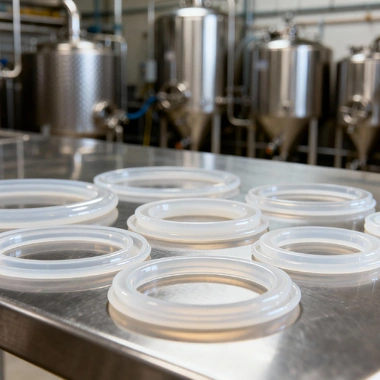
Key features of siliconeu:
-
exceptional temperature range from -60 °C to 230 °C
-
suitable for food-grade applications
-
resistance resistance to high temperatures and atmospheric conditions
-
Excellent elasticity even at low temperatures
Silicone seal finds applications in the production of beer, wine, edible oils, dairy products and spirits. In addition to the food industry, it is also used in laboratory equipment, the construction industry and households.
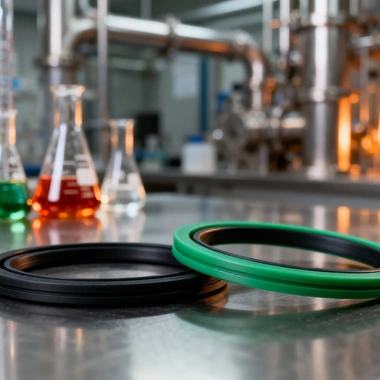
FPM (FKM, Viton) – chemical and thermal resistance
FPM, also known under the trade name Viton, is one of the most resistant elastomers. It is characterised by excellent chemical and thermal resistance resistance. This makes it ideal for demanding industrial applications.
Advantages of FKM:
-
temperature resistance from -30 to 200 °C, up to 220 °C for short periods
-
excellent resistance resistance to mineral oils, greases and chemicals
-
resistance resistance to ozone, weathering, ageing and acids
-
suitable for high-pressure applications
This material is used for seal in demanding conditions where standard elastomers fail. However, it is not resistant to polar solvents, glycol-based brake fluids and superheated steam.
PTFE – extreme chemical resistance
PTFE (polytetrafluoroethylene), known as ptfe, offers the highest chemical resistance and purity. It is almost completely chemically inert, which allows it to be used in extremely aggressive environments.
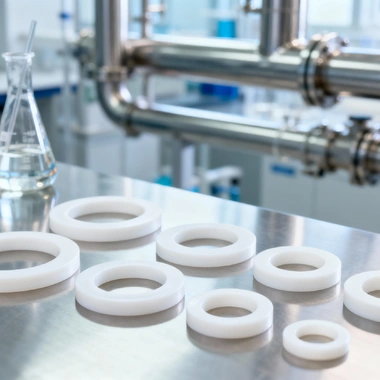
Characteristic properties of PTFE:
-
excellent resistance resistance to almost all chemicals within a pH range of 0–14
-
high temperature resistance up to 260 °C
-
outstanding stability during steam cleaning
-
exceptionally low coefficient of friction and non-stick surface
PTFE seal is used in the pharmaceutical, food and chemical industries. Its main advantage is its versatility, thanks to its high flexibility, strength and ability to withstand extreme temperatures.
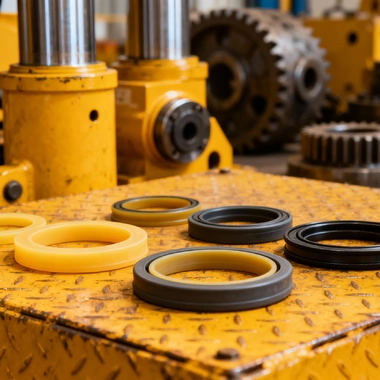
Polyurethane – high mechanical resistance
Polyurethane stands out for its mechanical properties, particularly its resistance resistance to wear, abrasion and tearing. It is the ideal choice for applications involving high dynamic loads.
Key features of polyurethaneu:
-
temperature range from -40 °C to +80 °C
-
excellent resistance resistance to extrusion, abrasion and wear
-
high tensile strength and resistance against tearing
-
good resistance resistance to mineral oils and lubricants
Polyurethane material is often used as a replacement for mechanical parts made of rubbere in applications where standard rubber is subject to rapid wear. However, it is not resistant to hot water, steam, aromatic and chlorinated hydrocarbons.
How to choose the right rubber seal
When selecting a suitable rubber seal, correctly assessing a range of factors plays a key role. It is not enough simply to know what types of seal exist. It is far more important to understand how individual para rubbermeters affect their functionality in a specific application.
Taking the working environment into account
The first step in selecting seal is a thorough analysis of the environment in which seal will operate. It is essential to consider:
-
contact with process media (mineral oils, fuels, acids)
-
exposure to external factors (UV radiation, ozone, weather conditions)
-
specific requirements of the industry sector (food industry, pharmaceutical industry)
For example, for outdoor use, EPDM is the ideal choice due to its resistance resistance to weathering, UV radiation and ozone. Conversely, in hydraulic systems where seal comes into contact with oils, NBR is the more suitable option.
Temperature and chemical resistance
Temperature significantly affects the properties of rubber seal. At low temperatures, seal may harden and lose its elasticity, whilst at high temperatures there is a risk of degradation. It is therefore essential to know:
-
the minimum and maximum operating temperatures
-
the duration of exposure to extreme temperatures
-
any temperature fluctuations
For example, silicone seal retain their elasticity even at -60 °C, whilst FKM withstands temperatures up to 200 °C, and even 300 °C for short periods. EPDM seal are suitable for temperatures ranging from -50 °C to 150 °C and offer excellent resistance resistance to acids and alkalis.
Pressure and mechanical loads
Excessive pressure may cause seal to deform or be forced out of the sealing surface. It is therefore important to take the following into account:
-
the maximum operating pressure of the system
-
dynamic or static loads
-
speed of movement in dynamic applications
For high-pressure applications, polyurethane seal are suitable, as they exhibit excellent resistance resistance to extrusion. In the case of rapid movements, a material with a low coefficient of friction (e.g. PTFE) should be selected to prevent the ‘stick-slip’ effect.
The 4 most common mistakes when choosing
When selecting the seal rubber, we often encounter the following errors:
-
Incorrect choice of material
A lack of knowledge about the properties of different types of rubbere leads to premature failure
-
Ignoring media compatibility
seal is not resistant to the working fluid
-
Incorrect installation
Uneven compression or insufficient lubrication causes deformation
-
Failure to observe temperature limits
exposure of seal to temperatures outside its operating range
Before making a final decision, you should also consider carrying out performance tests on seal, in particular hot and cold compression tests or a creep-relaxation test, which will help to determine resistance in relation to temperature, pressure and the forces acting on seal.
Care and maintenance for maximum service life seal
Regular care of rubber seal significantly extends its service life and ensures optimum performance. Whilst the quality of the material is essential, the way it is handled and maintained often determines the actual service life of the sealing components.
Correct installation and storage
Proper storage is absolutely essential to preserve the properties of the rubber seal. The ideal storage temperature is up to 30 °C, and should not exceed 50 °C. Low temperatures do not cause permanent damage, but it is advisable to warm seal to approximately 30 °C before use. The optimum relative humidity in an airtight environment is approximately 65 per cent.
During storage, it is important to:
-
Avoid direct sunlight and artificial light with a high UV content.
-
Prevent contact with ozone, which is extremely harmful to rubber.
-
Store seal in a loose, flat state; never under tension.
-
Separate silicone seal from metals using cardboard or cellophane dividers.
When fitting seal, apply special lubricants, which will facilitate installation and also extend service life. silicone sprays or technical grease are ideal for rubber seal in cars.
Checking for wear and replacement
Regular checks are the simplest way to prevent problems. For car seal, carry out a visual inspection at least once a year; for windows, we recommend checking the condition of the seal every time you clean them.
What to look out for during an inspection:
-
loss of elasticityi – the seal remains compressed and does not return to its original shape
-
visible cracks or flaking
-
hardening of the material, which indicates the need for replacement
After approximately 8–10 years of use, it is usually necessary to replace the seal. Replacement is not complicated, but it does require care. First, remove the old seal, clean the grooves thoroughly, and then install the new one in accordance with the manufacturer’s recommendations.
The effect of the environment on service life
The outdoor environment, in particular, has a dramatic effect on the service life of seal. seal suffers most during the winter months – freezing temperatures cause it to harden and crack. It is therefore essential to clean seal thoroughly and treat it with a protective coating before winter sets in. Clean using a multi-purpose cleaner and a cloth, then apply special waterproofing agents.
The effects of UV radiation and ozone cause premature ageing of the material. For example, in spring, when the trees are in bloom, pollen settles on seal, and under the influence of sunlight, it penetrates the surface and compromises the UV protection. We therefore recommend extra care during the pollen season – simply wipe seal regularly with a damp cloth.
The service life of different materials varies significantly. Under ideal conditions, seal made from natural rubber lasts 3–5 years, EPDM and NBR 5–10 years, whilst silicone-based seal can last up to 20 years.
In conclusion, regarding rubber and seal
Rubber seal is an indispensable component of many technical solutions in both industry and everyday life. Above all, the correct choice of material, shape and type of seal determines the reliability of the entire system. As we mentioned in the article, every material – whether NBR for oil applications, EPDM for outdoor use, silicone for the food industry, or FKM for chemically demanding environments – has its own specific properties and area of application.
When selecting seal, it is essential to take into account not only the operating environment and the medium, but also temperature range, pressure load and mechanical stress. Although navigating the various options can be complex, a careful analysis of these factors will help you avoid common mistakes and extend the service life of the entire system.
In addition to making the right choice, maintenance also plays a key role. Regular inspection, appropriate storage and the timely replacement of worn seal will ensure that your system operates reliably for a long time. Don’t forget that rubber seal are often the cheapest component of the system, but their failure can cause the most expensive damage.
And here’s an important piece of advice to finish with. Investing in a high-quality seal made from the right material always pays off. Although a higher-quality seal may be more expensive initially, it brings savings in the long term thanks to its longer service life and greater reliability. You should therefore give due consideration to the choice of rubber seal. It is often a small component with largem significance for the entire system.
Do you need a specific solution?
Get in touch. We’d be happy to help you choose or manufacture seal to suit your exact requirements.
Or download our catalogue, where you’ll find our full range and complete selection from the Aditeg workshop.
| +420 515 320 023 | ||
|
Mon–Thu 6:30–15:30 Fri 6:30–13:00 Lunch break 11:30–12:00 |
||
| [email protected] |
|
ADITEG, s. r. o. Vrbovec 321, 671 24 Znojmo |
