
adi-puk
Puck: Small – a product with great resistance
At first glance, a puck appears to be a simple item, but in reality it is a precisely engineered product with precisely defined properties.
It is most commonly associated with ice hockey, but its uses also extend into the technical and industrial sectors.
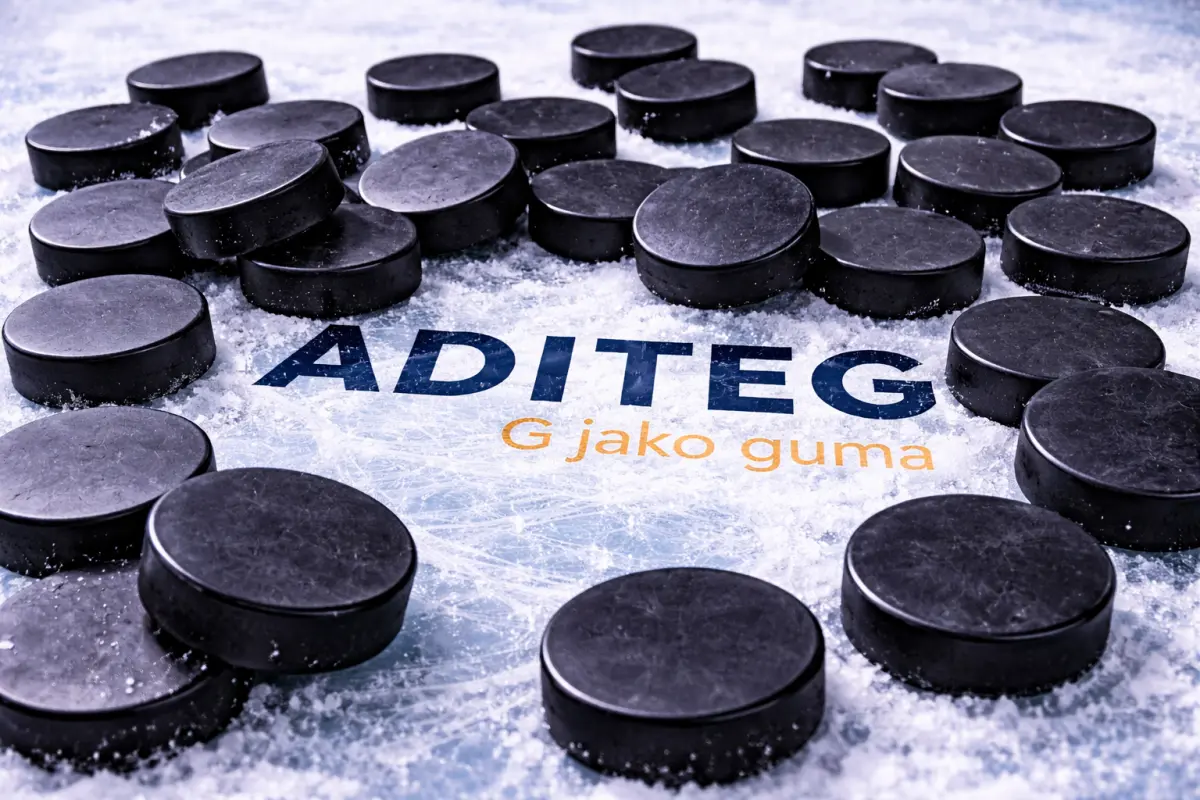
🔹 What is a puck?
A puck is a compact disc made of vulcanised rubber which must meet stringent requirements regarding:
- strength
- resistance impact resistance
- stability at low temperatures
👉 making it ideal for dynamic loads
🔹 What material is the puck made from?
The puck is made from a special rubber mixture, which contains:
- rubber (synthetic or natural)
- fillers (e.g. carbon black)
- plasticisers
👉 The result is a material with an ideal combination of:
✔ hardnessi
✔ elasticityi
✔ resistancei
🔹 How a puck is made
Puck production is a technologically precise process:
1. Preparation of the mixture
- mixing the raw materials
- adjusting the material’s properties
2. Pressing
- shaping in a mould
- precise dimensiony
3. Vulcanisation
- heat treatment
- achieving final strength
👉 The result is a homogeneous and durable product
🔹 Properties that a puck must fulfil
A high-quality puck must have:
✔ high resistance wear resistance
✔ low rebound
✔ stability in freezing conditions
✔ a long service life
👉 it is precisely this combination of properties that makes the puck unique
🔹 Fun fact: the puck is frozen
Before use, the puck is often:
👉 kept in a cool place
➡️ Reason:
- to reduce bounce
- better control whilst moving
🔹 Using the puck outside of hockey
A puck isn’t just a piece of sports equipment:
- technical stops
- protective components
- test components
- industrial applications
👉 thanks to its resistancei, it has a wide range of uses
🔹 A technical look at the puck
From a materials engineering perspective:
- it must absorb the impact energy
- it must not deform
- it must retain its shape even under load
👉 it is an ideal example of a functional rubber component
🔹 Why is a puck black
The typical black colour is no coincidence:
- it contains carbon black
- it increases strength
- it improves resistance resistance to UV
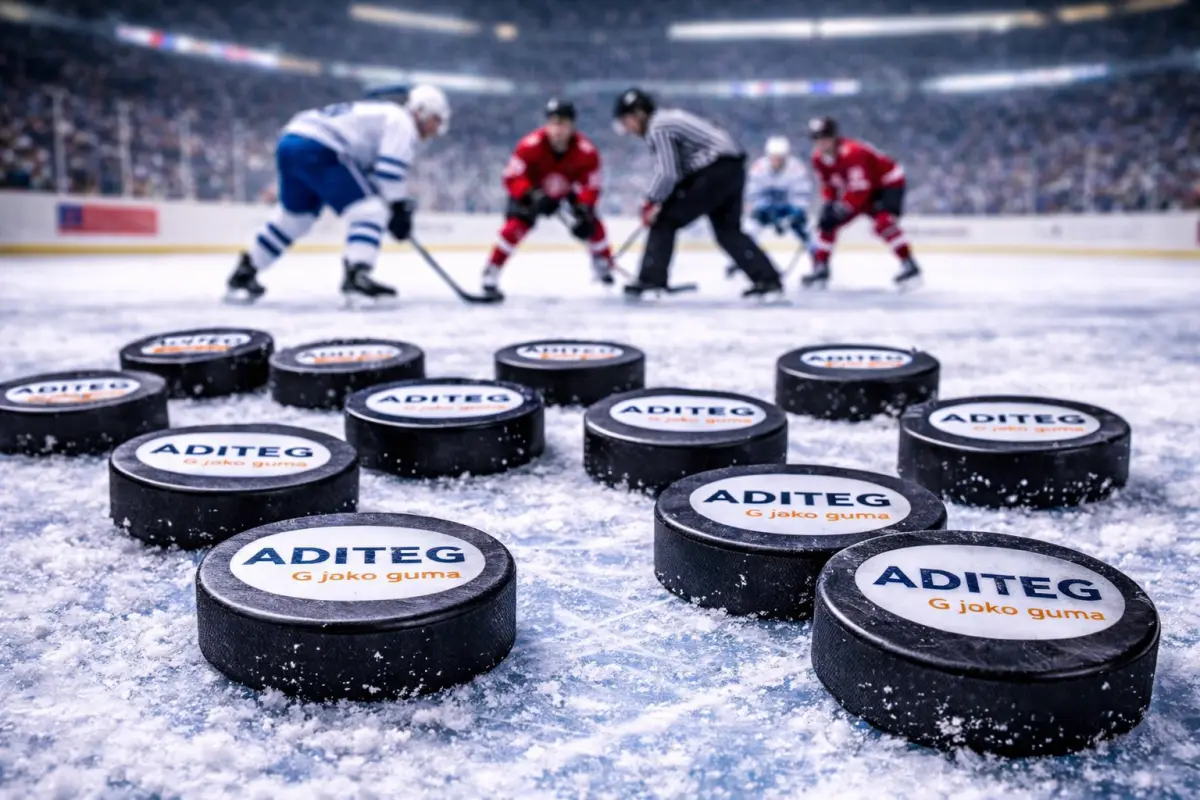
Interesting facts about the puck
🔹 A puck can travel at over 150 km/h
👉 a professional shot can reach speeds of up to 150–180 km/h
➡️ That’s why it’s:
- extremely hard
- potentially dangerous
🔹 The puck is harder than it looks
Even though it’s made of rubber:
👉 it feels almost like plastic or metal
➡️ due to its high density and vulcanisation
🔹 It is frozen before the match
Pucks are usually:
👉 stored in the freezer
➡️ reason:
- less bounce
- better control
- safer play
🔹A single puck only lasts a few minutes
In professional ice hockey:
❌ pucks are changed frequently
➡️ due to:
- wear and tear
- loss of properties
- safety
🔹The surface of the puck is not random
Side (edges):
👉 has grooves
➡️ improves:
- contact with the stick
- control when shooting
🔹The puck used to be made of wood
History:
👉 The first ‘pucks’ were:
- wooden
- or made of other materials
➡️ rubber only came along later
🔹There are also coloured pucks
They are used, for example:
- blue → lighter (training)
- orange → heavier (to strengthen the shot)
🔹The puck can withstand extreme stress
It must withstand:
✔ impacts from sticks
✔ contact with the ice
✔ high speeds
➡️ without cracking or deforming
🔹The puck is also used outside of ice hockey
👉 technical uses:
- stops
- damping components
- test components
| +420 515 320 023 | ||
|
Mon–Thu 6:30–15:30 Fri 6:30–13:00 Lunch break 11:30–12:00 |
||
| [email protected] |
|
ADITEG, s. r. o. Vrbovec 321, 671 24 Znojmo |
